Top 10 Stretches to Correct Anterior Pelvic Tilt
If you often deal with lower back pain, tight hips, or poor posture, you may have anterior pelvic tilt. This common posture problem happens when the front of your pelvis tilts forward, creating an exaggerated curve in your lower back. Sitting for long hours, weak core muscles, and tight hip flexors are some of the most common causes.
The good news is that regular stretching and strengthening can make a big difference. These stretches help improve flexibility, reduce muscle tightness, and support better posture over time.
In this guide, you’ll discover the best stretches to correct anterior pelvic tilt, along with simple tips to help you move and feel better.
What Is Anterior Pelvic Tilt?
Anterior pelvic tilt happens when your pelvis rotates forward more than normal. This posture change often causes:
- A noticeable arch in the lower back
- Tight hip flexors
- Tight lower back muscles
- Weak glutes
- Weak abdominal muscles
- Poor standing posture
- Hip or lower back discomfort
The best approach combines pelvic tilt correction stretches with strengthening exercises for the weak muscles.
1. Kneeling Hip Flexor Stretch
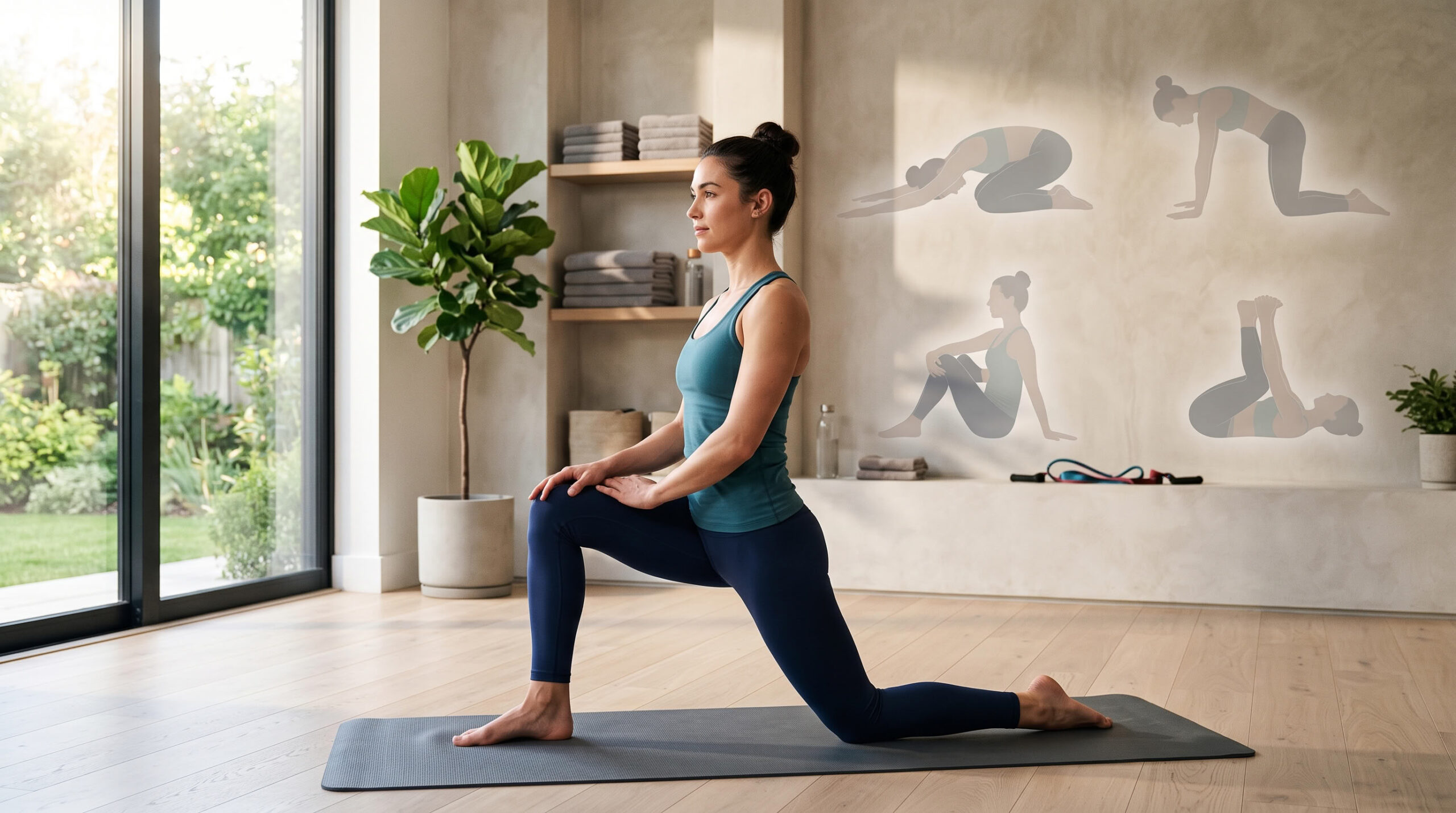
One of the most effective stretches to correct anterior pelvic tilt is the kneeling hip flexor stretch. Tight hip flexors pull the pelvis forward, so improving their flexibility is essential.
How To Do It
- Kneel on one knee.
- Place your other foot in front with the knee bent.
- Gently push your hips forward.
- Keep your chest upright.
- Hold for 30–45 seconds.
- Repeat on the other side.
Benefits
- Lengthens tight hip flexors
- Improves hip mobility
- Helps restore pelvic alignment
2. Child’s Pose
Child’s Pose is one of the easiest yoga poses for anterior pelvic tilt. It gently stretches the lower back, hips, and spine while helping your body relax.
How To Do It
- Kneel on the floor.
- Sit back onto your heels.
- Stretch your arms forward.
- Lower your chest toward the floor.
- Hold for 30–60 seconds.
Benefits
- Releases lower back tension
- Improves spinal mobility
- Encourages better posture
3. Figure Four Stretch
Tight glutes and piriformis muscles can affect pelvic positioning. This stretch helps loosen those muscles.
How To Do It
- Lie on your back.
- Cross one ankle over the opposite knee.
- Pull your supporting leg toward your chest.
- Hold for 30 seconds.
- Switch sides.
Benefits
- Stretches the glutes
- Improves hip flexibility
- Reduces hip tightness
4. Hamstring Stretch
Flexible hamstrings support healthy movement and complement other pelvic tilt correction stretches.
How To Do It
- Sit with one leg extended.
- Keep your back straight.
- Lean forward from your hips.
- Reach toward your toes.
- Hold for 30 seconds per side.
Benefits
- Improves hamstring flexibility
- Supports better posture
- Helps reduce muscle imbalance
5. Cobra Stretch
The Cobra Stretch gently mobilises the front of your body while improving spinal flexibility.
How To Do It
- Lie face down.
- Place your hands under your shoulders.
- Press up slowly.
- Lift your chest while keeping your hips on the floor.
- Hold for 20–30 seconds.
Benefits
- Improves spinal mobility
- Opens the front of the body
- Reduces stiffness
6. Butterfly Stretch
This simple stretch targets the inner thighs and hips.
How To Do It
- Sit on the floor.
- Bring the soles of your feet together.
- Let your knees fall outward.
- Lean forward gently.
- Hold for 30–45 seconds.
Benefits
- Improves hip flexibility
- Opens tight groin muscles
- Supports healthier movement
7. Happy Baby Pose
Happy Baby is another excellent choice among yoga poses for anterior pelvic tilt.
How To Do It
- Lie on your back.
- Grab the outside of your feet.
- Pull your knees toward your armpits.
- Keep your lower back on the floor.
- Hold for 30 seconds.
Benefits
- Opens the hips
- Relaxes the lower back
- Improves mobility
8. Standing Quad Stretch
Tight quadriceps often contribute to poor pelvic positioning.
How To Do It
- Stand tall.
- Hold one ankle behind you.
- Pull your heel toward your glutes.
- Keep your knees together.
- Hold for 30 seconds.
Benefits
- Lengthens the front of the thigh
- Reduces hip tightness
- Supports pelvic alignment
9. Supine Twist
This gentle stretch improves spinal rotation while relaxing tight muscles.
How To Do It
- Lie on your back.
- Bring one knee across your body.
- Keep both shoulders on the floor.
- Hold for 30 seconds.
- Repeat on the opposite side.
Benefits
- Improves spinal mobility
- Releases lower back tension
- Promotes flexibility
10. Cat-Cow Stretch
Cat-Cow is one of the best pelvic tilt correction yoga movements for improving spinal mobility.
How To Do It
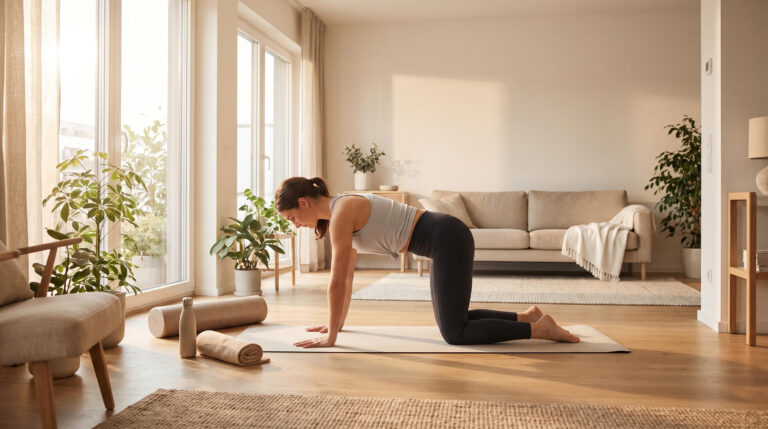
- Start on your hands and knees.
- Arch your back while lifting your head.
- Round your spine while tucking your chin.
- Move slowly for 10–15 repetitions.
Benefits
- Improves spinal flexibility
- Encourages pelvic control
- Reduces stiffness
Best Exercise For Anterior Pelvic Tilt
Stretching works best when combined with strengthening exercises. A complete exercise for anterior pelvic tilt should target weak muscles while improving flexibility.
Include exercises such as:
- Glute bridges
- Dead bugs
- Bird dogs
- Side planks
- Bodyweight squats
- Glute kickbacks
Doing these movements two to four times each week can support long-term posture improvements.
Core Exercises For Anterior Pelvic Tilt
Weak abdominal muscles often allow the pelvis to tilt forward. Adding core exercises for anterior pelvic tilt helps stabilise your spine and maintain better posture.
Try these beginner-friendly exercises:
- Front plank
- Side plank
- Dead bug
- Hollow body hold
- Reverse crunch
- Pallof press
Focus on slow, controlled movements instead of rushing through each exercise.
A Simple Anterior Pelvic Tilt Workout
A balanced anterior pelvic tilt workout combines stretching and strengthening.
Warm-Up
- Cat-Cow – 1 minute
- Hip circles – 1 minute
Stretching
- Kneeling Hip Flexor Stretch
- Child’s Pose
- Figure Four Stretch
- Standing Quad Stretch
Strengthening
- Glute Bridges
- Dead Bugs
- Bird Dogs
- Side Planks
Finish with deep breathing and gentle walking for a few minutes.
How To Cure Anterior Pelvic Tilt
Many people wonder how to cure anterior pelvic tilt. In most cases, consistent daily habits produce the best results.
Helpful strategies include:
- Stretch tight hip flexors every day
- Strengthen your glutes and core
- Avoid sitting for long periods
- Stand up and move every hour
- Practise good posture
- Stay physically active
Remember that posture changes happen gradually. Most people notice improvement after several weeks of consistent exercise.
Pelvic Tilt Correction For Men
Pelvic tilt correction for men follows the same principles as for women. However, men who spend long hours driving, lifting weights, or sitting at a desk may develop tighter hip flexors and weaker glutes.
A balanced routine should include:
- Hip flexor stretching
- Glute strengthening
- Core training
- Mobility exercises
- Daily walking
Consistency is more important than intensity.
Anterior Pelvic Tilt In Kids
Anterior pelvic tilt in kids is sometimes simply part of normal growth and posture development. However, persistent symptoms or significant posture changes should be assessed by a qualified healthcare professional or paediatric physiotherapist.
Parents can encourage healthy habits by:
- Limiting excessive screen time
- Promoting outdoor play
- Encouraging regular movement
- Teaching good sitting posture
- Choosing age-appropriate physical activities
Avoid starting corrective exercise programmes without professional guidance if your child has pain or difficulty moving.
Tips For Better Results
To get the most from these anterior pelvic tilt correction stretches:
- Stretch at least 4–5 days each week.
- Move slowly without bouncing.
- Breathe normally during every stretch.
- Pair stretching with strengthening exercises.
- Stay patient and consistent.
Small improvements every week can lead to lasting posture changes.
The Takeaway
Improving your posture doesn’t happen overnight, but it is absolutely possible with the right routine. These stretches to correct anterior pelvic tilt can help loosen tight muscles, improve flexibility, and support better body alignment.
For the best results, combine these anterior pelvic tilt correction stretches with strengthening exercises that target your glutes and core. A balanced routine of stretching, strengthening, and good daily habits is the key to long-term posture improvement and reduced discomfort.