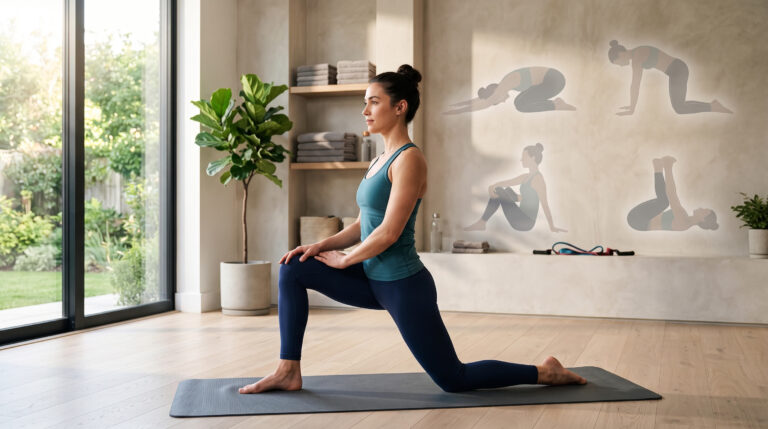
10 Best Stretches for Lower Back Pain and Stiffness
Back pain can make even the simplest daily tasks feel difficult. Sitting for long hours, standing all day, lifting heavy objects, poor posture, or even stress can leave your lower back feeling tight and sore. The good news is that gentle stretching can often help reduce stiffness, improve flexibility, and make moving around much easier.
If you wake up with a stiff back or spend most of your day at a desk, adding a few minutes of stretching to your routine can make a big difference. Many people find that regular lower back pain stretches help loosen tight muscles and support better posture over time.
In this guide, you’ll learn 10 easy stretches you can do at home, at the office, or almost anywhere. Some stretches are perfect for mornings, while others are great if your back starts hurting after sitting or standing for too long. These stretches for lower back pain are beginner-friendly and require little to no equipment.
Important: If your pain is severe, lasts for several weeks, follows an injury, or spreads down your legs with numbness or weakness, talk to a healthcare professional before trying any exercise.
Why Stretching Helps Lower Back Pain
Your lower back works hard every day. It supports your body when you walk, sit, stand, bend, and lift things. When the muscles around your spine become tight, they can pull on your lower back and limit your movement. This often leads to stiffness and discomfort.
Stretching helps by:
- Improving flexibility in tight muscles
- Increasing blood flow to the lower back
- Reducing muscle tension
- Supporting better posture
- Making everyday movements feel easier
Many people combine stretching with light strengthening exercises because stretches and exercises for lower back pain often work better together than stretching alone.
Before You Start
Keep these simple tips in mind before doing any stretch:
- Move slowly and never force your body into a painful position.
- Stretch until you feel gentle tension, not sharp pain.
- Breathe slowly and deeply throughout each stretch.
- Hold each stretch for 20 to 30 seconds unless noted otherwise.
- Repeat each stretch two or three times.
- Wear comfortable clothing that allows easy movement.
Consistency matters more than intensity. Stretching for just 10 minutes most days can be more helpful than doing a long session once a week.
1. Knees-to-Chest Stretch
The knees-to-chest stretch is one of the easiest ways to gently relax the muscles in your lower back. It can also reduce stiffness after sleeping or sitting for long periods.
How To Do It
- Lie flat on your back with both knees bent.
- Keep your feet flat on the floor.
- Bring one knee toward your chest using both hands.
- Hold for 20 to 30 seconds.
- Lower your leg and switch sides.
- Finally, bring both knees toward your chest together and hold.
Benefits
- Gently stretches the lower back muscles
- Helps reduce morning stiffness
- Relaxes tight hips
- Improves flexibility
This is one of the most popular stretches for pain in lower back because it’s gentle enough for most beginners.
Tip: Keep your shoulders relaxed and avoid lifting your head off the floor.
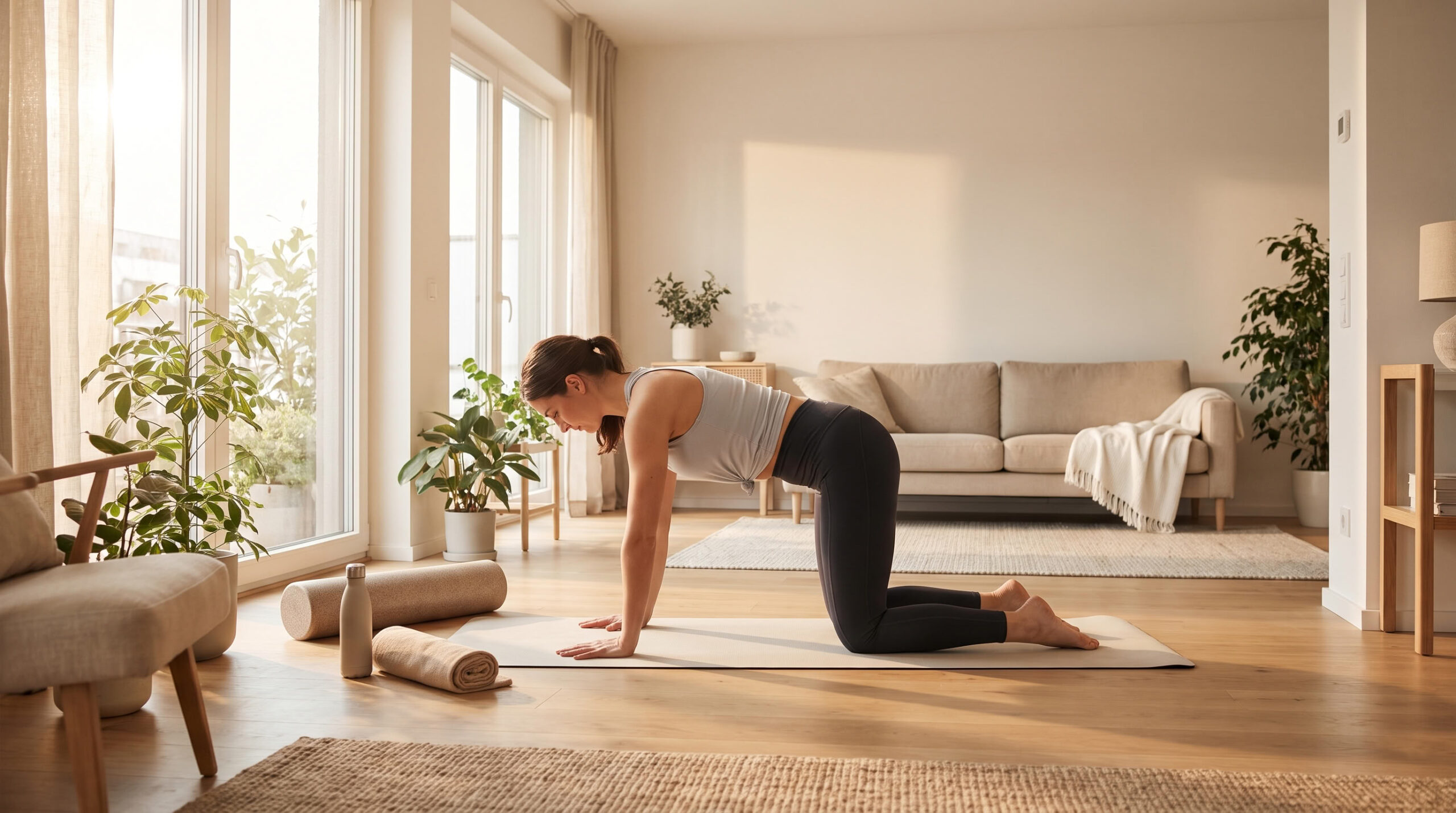
2. Cat-Cow Stretch
The cat-cow stretch improves movement throughout the spine while gently stretching your back muscles.
How To Do It
- Start on your hands and knees.
- Place your hands directly under your shoulders.
- Keep your knees under your hips.
- Slowly arch your back while lifting your head and tailbone (Cow).
- Then round your back toward the ceiling while tucking your chin (Cat).
- Continue moving slowly between both positions.
Repeat for 8 to 10 slow breaths.
Benefits
- Improves spinal mobility
- Reduces stiffness
- Encourages better posture
- Warms up the back before other stretches
This movement is often recommended among stretches for lower back pain and stiffness because it gently moves the spine through a comfortable range of motion.
Tip: Let your breathing guide the movement instead of rushing through each repetition.
3. Child’s Pose
Child’s Pose is a relaxing yoga stretch that gently lengthens the muscles along your spine.
How To Do It
- Kneel on the floor.
- Sit your hips back toward your heels.
- Stretch your arms forward.
- Lower your chest toward the floor.
- Rest your forehead on the mat or a pillow.
- Hold for 30 seconds while breathing deeply.
Benefits
- Lengthens the lower back muscles
- Releases tension after a busy day
- Helps relax the hips
- Can reduce stiffness from prolonged sitting
If your knees feel uncomfortable, place a folded towel under them for extra support.
4. Seated Spinal Twist
If you spend hours working at a desk, this stretch is especially helpful. It’s one of the easiest stretches for lower back pain while sitting because you can even perform a gentle version in your office chair.
How To Do It
- Sit tall in a sturdy chair or on the floor.
- Keep both feet flat.
- Place your right hand on the outside of your left knee.
- Place your left hand behind you for support.
- Slowly twist your upper body to the left.
- Hold for 20 to 30 seconds.
- Repeat on the opposite side.
Benefits
- Improves spinal flexibility
- Relieves stiffness from sitting
- Encourages better posture
- Helps reduce muscle tightness
For people who work at a computer all day, this is one of the most useful stretches for lower back pain at work because it only takes about a minute.
Office Tip: Try this stretch every hour if you’ve been sitting for a long time.
5. Standing Side Bend
You don’t always need to lie on the floor to stretch your back. This simple movement is perfect during work breaks and is one of the easiest stretches for lower back pain while standing.
How To Do It
- Stand with your feet about shoulder-width apart.
- Raise your right arm overhead.
- Slowly bend your body to the left.
- Keep both feet firmly on the floor.
- Hold for 20 seconds.
- Return to the center and switch sides.
Benefits
- Stretches the muscles along both sides of your back
- Improves flexibility
- Helps relieve stiffness after standing
- Supports better posture
If you work in retail, healthcare, teaching, or any job that requires standing for long periods, this stretch can provide quick relief during short breaks.
6. Figure Four Stretch
The figure four stretch targets the muscles around your hips and glutes. Tight hips can put extra stress on your lower back, so improving flexibility in this area may help reduce discomfort.
How To Do It
- Lie on your back with your knees bent.
- Cross your right ankle over your left knee.
- Lift your left leg and gently pull it toward your chest.
- Hold for 20 to 30 seconds.
- Switch sides and repeat.
Benefits
- Stretches the glutes and outer hips
- Helps reduce tension around the pelvis
- Supports better lower back movement
- Improves overall flexibility
Move slowly and stop if you feel any sharp pain in your hips or knees.
7. Pelvic Tilt
The pelvic tilt is a gentle movement that helps improve control of your core muscles while reducing tension in the lower back.
How To Do It
- Lie on your back with your knees bent and feet flat.
- Tighten your stomach muscles.
- Gently press your lower back into the floor.
- Hold for five seconds.
- Relax and repeat 10 times.
Benefits
- Improves core stability
- Supports the lower back
- Reduces stiffness
- Prepares your body for other stretches
Many physical therapists recommend this simple movement because stretches and exercises for lower back pain often work best when they include gentle core activation.
8. Wall Hamstring Stretch
Tight hamstrings can pull on your pelvis and contribute to lower back discomfort. This is one of the most effective wall stretches for lower back pain because it gently stretches the back of your legs without putting pressure on your spine.
How To Do It
- Lie on your back beside a wall.
- Lift one leg and rest your heel against the wall.
- Keep your other leg bent or straight on the floor.
- Slowly move closer to the wall until you feel a gentle stretch.
- Hold for 20 to 30 seconds.
- Repeat with the other leg.
Benefits
- Loosens tight hamstrings
- Reduces strain on the lower back
- Improves flexibility
- Supports better posture
If you’re searching for lower back pain relief stretches wall routines, this is one of the easiest places to start.
9. Wall Back Extension Stretch
This simple standing stretch is great when your back feels stiff after sitting or standing for a long time. It requires only a wall for support.
How To Do It
- Stand facing a wall.
- Place both hands against the wall at shoulder height.
- Step back slightly.
- Keep your arms straight and gently push your hips backward.
- Allow your chest to lower between your arms.
- Hold for 20 to 30 seconds.
Benefits
- Stretches the shoulders and back
- Relieves tension after desk work
- Improves posture
- Increases flexibility
This is another excellent choice among wall stretches for lower back pain because it’s easy to do at home or even during a break at work.
10. Standing Hip Flexor Stretch
Long periods of sitting can shorten your hip flexor muscles, which may contribute to lower back pain. Stretching them can help improve posture and reduce tightness.
How To Do It
- Stand with one foot in front of the other.
- Bend your front knee slightly.
- Keep your back leg straight.
- Gently shift your weight forward.
- You should feel a stretch in the front of your back hip.
- Hold for 20 to 30 seconds before switching sides.
Benefits
- Loosens tight hip flexors
- Improves posture
- Helps reduce lower back tension
- Supports comfortable walking and standing
This stretch is especially useful for office workers who spend most of the day sitting.
Easy Stretching Routine At Home
If you’re new to stretching, you don’t have to do all ten stretches every day. Start with this simple routine:
- Knees-to-Chest Stretch
- Cat-Cow Stretch
- Child’s Pose
- Figure Four Stretch
- Wall Hamstring Stretch
This routine takes about 10 to 15 minutes and works well in the morning or evening.
Quick Stretching Routine At Work
If you’re working at a desk all day, taking short movement breaks can help prevent stiffness.
Try these stretches every one to two hours:
- Seated Spinal Twist
- Standing Side Bend
- Wall Back Extension Stretch
- Standing Hip Flexor Stretch
These are practical stretches for lower back pain at work because they require very little space and no special equipment.
If your job keeps you seated for long periods, remember to stand up, walk for a minute, and gently stretch before sitting again. Small movement breaks throughout the day often make a noticeable difference.
Tips For Women With Lower Back Pain
Many women experience lower back discomfort due to pregnancy, menstrual changes, or long hours of standing or sitting. While the cause may vary, gentle stretching can often help relieve muscle tightness.
Some of the most comfortable lower back pain relief stretches for women include:
- Knees-to-Chest Stretch
- Child’s Pose
- Cat-Cow Stretch
- Figure Four Stretch
- Standing Side Bend
These are also popular lower back pain stretches women can include in a regular flexibility routine. If you’re pregnant, speak with your healthcare provider before starting new stretches, as some movements may need to be modified.
Common Mistakes To Avoid
Stretching should never make your pain worse. Avoid these common mistakes:
- Bouncing during a stretch
- Holding your breath
- Forcing your body beyond a comfortable range
- Stretching through sharp pain
- Skipping your warm-up after long periods of inactivity
Gentle, controlled movements are usually more effective than pushing yourself too hard.
When To See A Doctor
Stretching can help many people, but it’s not the right solution for every type of back pain.
Seek medical advice if you have:
- Severe pain after a fall or accident
- Pain that lasts more than a few weeks
- Numbness or tingling in your legs
- Muscle weakness
- Loss of bladder or bowel control
- Fever along with back pain
These symptoms may require prompt medical evaluation.
Frequently Asked Questions
How often should I do lower back stretches?
For most people, stretching three to five times a week is a good starting point. If your body feels comfortable, you can do gentle stretching daily.
Can stretching cure lower back pain?
Stretching may reduce muscle tightness and improve flexibility, but it isn’t a cure for every cause of back pain. If your symptoms continue or worsen, consult a healthcare professional.
Is it okay to stretch when my back hurts?
Gentle stretching may help mild muscle tightness, but you should stop immediately if a stretch causes sharp or increasing pain.
Which stretch is best after sitting all day?
The Seated Spinal Twist, Standing Side Bend, Wall Back Extension Stretch, and Standing Hip Flexor Stretch are excellent choices after long periods of sitting.
The Takeaway
Lower back pain is common, but it doesn’t have to control your daily life. Spending just a few minutes each day on gentle stretching can help improve flexibility, reduce stiffness, and make everyday activities feel more comfortable.
Whether you’re looking for stretches for lower back pain at home, easy stretches for lower back pain while sitting at your desk, or simple stretches for lower back pain while standing during work breaks, consistency is the key. Listen to your body, move slowly, and make stretching part of your daily routine.
Over time, these simple habits can help you move more freely, improve your posture, and support a healthier, happier back.